
Published 14 February 2017 · Updated 19 August 2026 · Written by Tibor on the second floor of Powerscourt Townhouse Centre, Dublin 2
Everybody’s watch is a portable clock. That is the unromantic definition, and it is the useful one. Service it before the oil turns, not after the hands stop. Omega asks owners for a complete service every 5 to 8 years and a water-resistance check once a year (Omega, 2026). Fifteen seconds a day either way is the line we use on ordinary wear in Powerscourt. That is a bench convention, not a COSC certificate.
Horology is the art and science of measuring time: clocks, watches, sundials. The earliest timekeepers were too heavy to wear, and it took centuries of work to get a movement small enough for a wrist. The best recipe for a watch’s wellbeing is still more care and less fuss. Admire it from the outside, and leave the inside alone until it is time for an overhaul.
What you need to know
What is everybody’s watch?
A watch is a portable clock you wear, and that is all the poetry most people need. Clocks stayed on walls and mantelpieces while watches had to get small enough for a pocket, then a strap. Once the movement is on a wrist, the job is to keep it clean, oiled, and running at a rate you can live with. The home routine sits on how to care for vintage watches. This page is the idea underneath it: what the thing is, what “right time” means, and when to book a service. You do not need a certificate to own one, but you do need someone who will open it when the oil is gone.
What is “the right time” on a wristwatch?
Time is not a natural object like daylight. We invented it so we could meet. For a COSC-certified mechanical movement larger than 20 mm, Omega still publishes a band of -4 to +6 seconds a day (Omega, 2026). Their Master Chronometer watches are tighter: 0 to +5 seconds a day on movements over 26 mm. COSC is the independent Swiss lab that has tested movements since 1973. Ordinary vintage pieces on this bench are not those certificates, and fifteen seconds either way in twenty-four hours is still a moderately good daily watch. Hitting the second across a whole day is hard. Do not pretend otherwise.
| Kind of watch | Daily rate | Whose number |
|---|---|---|
| Everyday mechanical on this bench | About 15 seconds either way | Powerscourt convention |
| COSC chronometer, over 20 mm | -4 to +6 seconds | Omega, citing COSC |
| Omega Master Chronometer, over 26 mm | 0 to +5 seconds | Omega / METAS |
The quality of a watch as a timekeeper is its rate. Does it gain or lose steadily? Either can be narrowed by regulation. Wound regularly, cleaned, overhauled, and re-oiled on a sensible interval, a good watch should last a lifetime.
We would rather regulate an honest gain than chase a fantasy of zero seconds. Battery and strap work sits on watch repair in Dublin.
When should you service a watch?
Omega’s own window is 5 to 8 years for a complete service, plus that yearly water-resistance check. Rolex now tells owners to come in about every ten years, depending on the model and how the watch is actually worn (Rolex, 2026). A family watch that sat in a drawer in Cork often needs oil sooner than either published number. Dried oil is how an inheritance becomes a project.
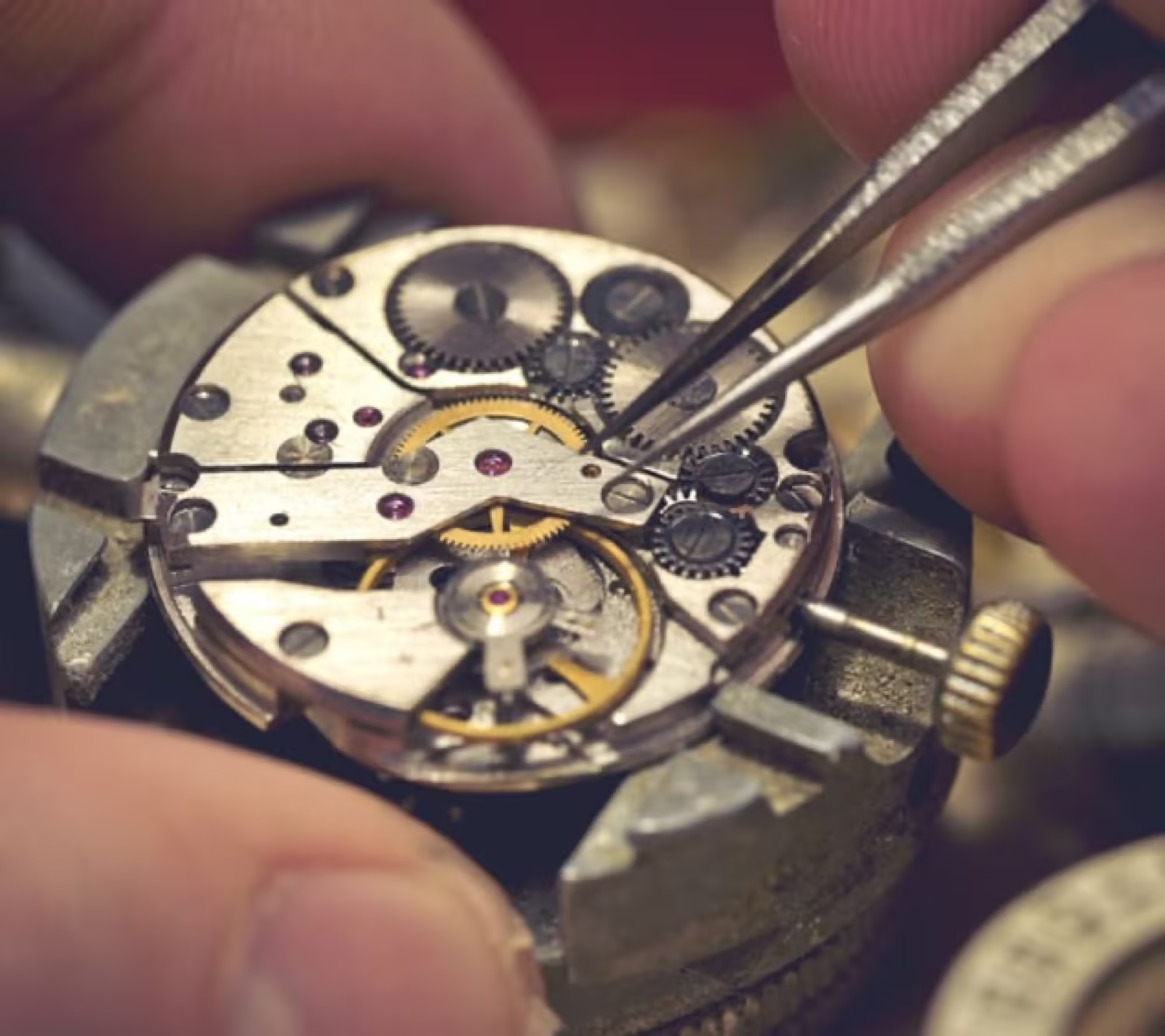
A service is not a polish. The movement comes apart, the parts are cleaned, fresh oil goes in, and the rate is set again. Omega lists the steps of a complete service on its own site. What we do on this floor is battery replacement and strap replacement.
Quartz still needs a look when the cell is changed. A dead cell left in the case can leak. That job is how to change a watch battery, not a full overhaul, unless the acid has already reached the movement.
When should you trust a horologist?
You want a horologist when you buy. The vintage watches we sell have been opened here. Tibor is the watchmaker on this bench. He would rather lose a sale than send you home with a watch he would not wear. Battery and strap replacement are the only jobs we can take on a watch you already own.
A fifty-year-old Omega can keep as good time as a new one if someone has oiled it. That is what we see after regulation, not a brochure claim. Your money often goes further in vintage than in new steel, which is not a licence to skip the bench. Come to the second floor of Powerscourt Townhouse Centre, 59 William Street South, Dublin 2, Monday to Saturday, 11:00 to 18:00, or contact us.
Questions? We are on the second floor of the Powerscourt Townhouse Centre, Dublin 2.
Contact Us